


Loving What Is
Amor Fati is a Latin phrase meaning love of fate. More than accepting everything life brings, it invites us to embrace it completely. Not because every experience is pleasant, but because every experience belongs.
The question is not whether life unfolds according to our preferences.
The question is whether we can meet reality without resistance.
The Symbol: The Tree & The Moon
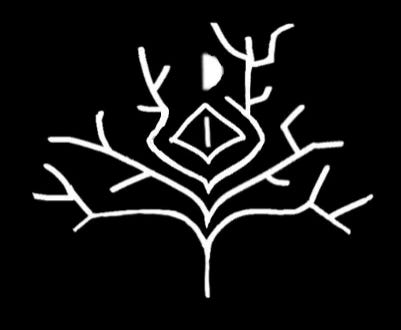
The symbol of Amor Fati combines two timeless archetypes: the tree and the moon.
The tree represents the countless paths life may take. Every branch extends in a different direction, yet each remains connected to the same roots. What appears random often belongs to a deeper order that cannot be seen all at once.
Above the tree rests the moon, a symbol of timing, rhythm, and fate. The moon follows an unchanging cycle, yet its appearance depends entirely upon perspective. It is never early. Never late. It always appears exactly as it must.
Perhaps life unfolds in the same way.
What seems like an obstacle today may become tomorrow’s greatest gift. What feels painful now may later reveal itself as the very experience that shaped us.
Amor Fati replaces the question,
“Why is this happening to me?”
with another:
“This belongs to my path.”
The Sun and the Moon
Amor Fati and Memento Mori are complementary ideas.
One reminds us that life ends.
The other reminds us to love everything that comes before that ending.
The Sun symbolizes certainty. Like death itself, it follows a path that cannot be escaped.
The Moon symbolizes acceptance. It reflects the quiet understanding that life unfolds according to rhythms larger than ourselves.
Together they reveal a simple truth.
Life is finite.
Everything that happens within it belongs to it.
Living Amor Fati
Amor Fati does not require passivity. Nor does it suggest that nothing should ever change. It simply invites us to stop resisting what already exists.
Every experience carries something with it. Every setback contains information. Every loss reshapes us, often in ways we only recognize much later.
Instead of asking, “Why did this happen?”, we might ask, “What becomes possible because it happened?”
The question changes.
So does the experience.
Closing Reflection
Perhaps fate is not something standing in our way. Perhaps it is the path itself.
To love one’s fate is not to celebrate suffering. It is to recognize that nothing stands outside the whole. Every joy belongs. Every loss belongs. Every beginning. Every ending.
Everything belongs.
That is Amor Fati.